Sunday, 9 October 2016

WEEK 11:AUTOMATISM: Text, Film and Sound Response.


Tacita Dean: Blackboard drawings 1996
AUTOMATISM: Text, Film and Sound Response.
In the context of this lesson automatism relates to a method of drawing/writing that corresponds to a form of ‘scribbling on paper’. As one of the methods embracedby the Surrealists to engage a more immediate connection with the unconscious, automatism provided a method for making unconscious associations more visibly present and instinctive. Automatism connected the artist with the immediacy of experience by attempting to dissolve control of any conscious or rational interpretation of the world. Essentially this lesson engages elements of automatism in the form of film, sound and text as a means of exploring the layered relationship between perception and representation.

BRIEF: Students need to come to this lesson prepared to embrace the experimental methods and unexpected outcomes that follow.

Students are come to this lesson prepared with three different automatistic responses.

An Ekphrastic poetic response (poetic response to any art work of your choice)

A series of random sound recording

A series of random filmic response


In this lesson students will engage in a series of automatism-­‐based exercises that relate to sound, film and textual elements. The lesson will allow students to formulate a more structured response to each of the components gathered in preparation for the class. The outcomes for this lesson will remain open-­‐ended and may be extended into the final free studio session before assessment.


https://www.youtube.com/watch?v=El8mLrBSPlA


http://sillydragon.com/muybridge/Plate_0091/Plate_91_Nude_Male_Acending_Stairs.jpg

Monday, 3 October 2016

WEEK 10:Vision and Modernity: Machine and the Eye


With the increasing sway of digital intervention upon our graphic response to our surroundings, it could be suggested that the act of drawing is gradually being dissolved by digitally enhanced methodologies. The cultural impact of photography and a host of related image enhanced devices have historically relinquished the human eyesposition as the most sanctioned and perceptive mode for interpreting the visible world. Digital and technological advances are continuously altering the faith we place in our methods of personal graphic response and interpretation of the visible world.

BRIEF: In this exercise each student has the option of creating either a 2D drawing/collage, film, projection or 3D form that conveys a point of collision between the hand drawn and some form of scientific or digital intervention. The scientific reference may come from early historical drawing aids such as the camera obscura, the stereoscope, the slide projector or something as fundamental as the lens. Alternatively students can use a contemporary digital device that alters or reconfigures a series of nature-­‐based drawings as a means of exploring the relationships between science and nature.


A suggested approach could be tochoose a form from nature and complete a study or series of studies in any medium. These initial works could then be documented, photoshopped and reinterpreted in another medium. The point of ‘collision’ between the hand drawn and technology relies entirely upon student’s imaginative interpretation.


Mediums may include drawing, printmaking, rubbings, sculpture, film or ephemeral performance pieces etc. For the practicalities of thestudio-­‐based lesson it is advised that students keep their use of digital media to lap tops, mobile phones or other fundamental mechanisms.
The outcome for this project may be presented as a hybrid form of collage, drawings, assemblages, film or digital based works that establish and challenge new means of visual representation. Ultimately it is for each student to negotiate their own measure and degree of intervention between technology and their personal graphic response.

Thursday, 22 September 2016

WEEK 9:The Photographic Image: Memory and Place

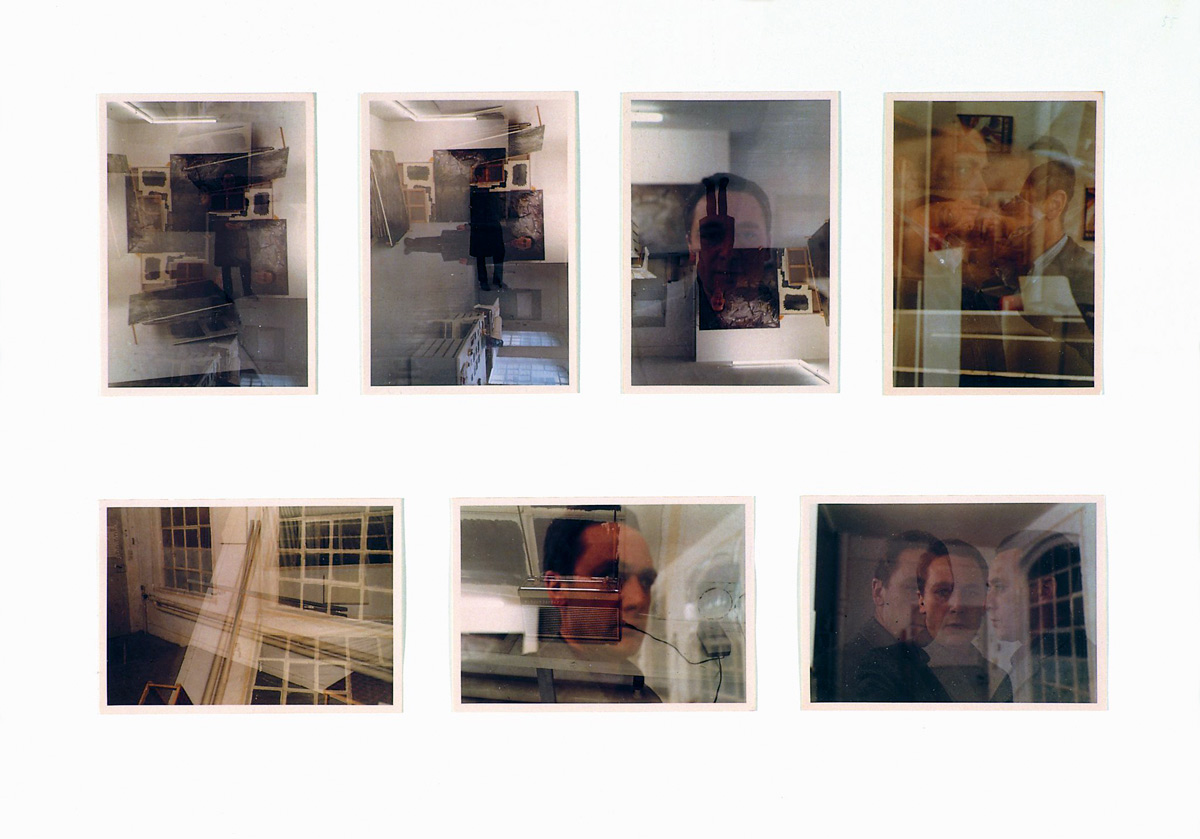
Gerhard Richter Atlas 2001 [detail]
[image source: https://artblart.files.wordpress.com/2012/04/gerhard_richter_atlas_tafel_58-web.jpg]


As an indexical anchor within contemporary visual culture the photograph continues to provide an effective form for exploring notions of memory and place. Providing confirmation of the immediacy of the moment the photograph is also capable of filling in the gaps in our mental picture of past and present, often making us feel that the world is more accessible than it really is. In providing assess to easy manipulation and alteration of the photographic image the digital agemay have fractured the photographs status as proof of evidence but regardless of concerns of authenticity there is no denying that the photograph maintains a powerful relationship between image and narrative.

BRIEF: For this lesson each student is to bring a combination of their own architectural interior and exterior photographs and any other images that relate a sense of connection to place or perhaps even displacement within a specific environment. You will need a minimum of 9 images. [the choice of scale is to be decided by each student] Multiple copies of your original photographic images may be required. Spend the session de-­‐constructing and reassembling those architectural spaces and related images into a single fabricated space or series of spaces.[the photocopier can provide an interesting start] In a similar fashion to the body-­‐portrait project the intervention of a graphic medium is to be engaged as a way of consolidating and reinforcingwhat it is you wish to convey. The degree of intervention of collage and any graphic mediumor filmic response will often be dictated by each student’s initial response to the de-­‐construction process.

An alternative approach to gathering your resource material is to collect found photographs of environments and discarded family snap shots that engage a more objective[detached] approach to the project. The postcard as a memento of place could also provide an interesting starting point.

The elements to be considered in this project relate to the photographic image as an index to notions of time, the present and the past, transitions of space etc.

-­‐the photograph as aide-­‐memoire [an aid to memory]

-­‐ the photograph as an authentic document in the digital age. -­‐the photograph as an archival resource.


-­‐the photograph as a harbinger of historical and personal narratives.

Sense of place:
connection to the now, this is the only time I have ever felt a connection to a geographical location

Thursday, 15 September 2016

WEEK 8: Bricolage :Narratives of Debris

The Bricoleur: Narratives of Debris
Levi -Strauss presented his concept of bricolage in ‘The Savage Mind’ to emphasize the
creation of new meanings through the altering and adaptation of specific cultural
narratives. In the context of contemporary western society the bricoleur could be
considered as the odd-jobs person who keeps at hand all of the left over parts of every
gadget or machine they have tinkered with in order to create new inventions. The
bricoleur also represents a counterpart to the engineer who has a structured method
and all of the essential tools and materials to complete a specific project. In contrast the
bricoleur gleans discarded materials, using everyday objects as a method of delivering
new relationships between perception and experience. Within the realms of visual arts
practice the use of everyday objects allows for a surrendering of the artist’s traditional
ties to skill and control and therefore permitting the pre-existing associations of found
objects to complete the meaning of the work.

BRIEF: For this lesson students are to come prepared with a collection of gleaned
materials in order to create a bricolage/assemblage work. As a ‘narrative of debris’ the
final work may very well suggest a functional object or simply remain a self-contained
art piece. Each student is to develop his or her own conceptual considerations. A
suggested approach is for students to form a collaborative engagement with their
gleaned materials that allows the objects to suggest their own possible associations as
opposed to continually attempting to control the final outcome.
As a studio based project students need to be mindful of simple and creative methods of
binding surfaces and objects together. Basic materials such as string, thread and muslin combined with PVA glue can form effective joining and binding methods.

Play with the idea of :
Self limited potential
Hiding yourself
liminal space of personal transformation

What I am talking about: 
These items belong to my old self and reflect the liminal space between the old self and the new.


Items chosen for project and what they are:

Old Tshirt: Container for caporial being

LG mobile Phone: Connection and disconnection
                         Global

Headphones: Intimate    Disconnection    Sound    Escape/ Hiding

Sound file:  old sound recording

Parable of the Lamp Under a Basket: Matthew 5:14-16; Mark 4:21-25; Luke 8:16-18; Luke 11:33-34
In the parable of the lamp under a basket, Jesus notes that no one lights a lamp in order to hide it. On the contrary, those who light a lamp set it on a table to fill the whole room with light.

New Living Translation
Then Jesus asked them, "Would anyone light a lamp and then put it under a basket or under a bed? Of course not! A lamp is placed on a stand, where its light will shine.


Sunday, 21 August 2016

WEEK 5: Unfamiliar Object: The Altered Book

COLLAGE: Unfamiliar Object: The Altered Book

The definition of an ‘altered book’ often falls within the shadows of the of artists’ book and at times the terms could be interchangeable. Both forms frequently challenge the fundamental associations that unfold between text and narrative together with content and meaning. Processes engaged within the construction of an altered book often physically adjust, manipulate and transform the very structure of the traditional codex form. Such alterations and modifications can be dramatic but equally just as potent with a more poetic and understated engagement with the book form.

BRIEF: For this project students are to bring to thestudio a book form that they are prepared to alter and perhaps partially destroy as a way of questioning the relationship between text, narrative, content and meaning. As a method of establishing a starting point each student is asked to imagine the book form as an unfamiliar object, to suspend any pre-­‐existing perceptions they have of this object or its content, as if it had simply fallen from the sky. Begin by writing down fundamental descriptions of this unfamiliar object. From this initial engagement and exploration of the book form begin to find your own methods of altering its form, its content or both.In thinking about how your work might challenge the interplay of content and meaning reflect on:

-­‐Language: how can text become divorced from meaning through alterations to the book form? -­‐Narrative: how can collage elements be included to dissolve the fixed narrative structure? -­‐Form: how can the book as a familiar everyday object be rendered unfamiliar?


The degree of modification to thebook form will rely upon each individual student’s particular response. If you see it as offering an avenue for a series of drawings, photographs or video works then embrace these initial reactions. The choice of a book form is not restricted to the traditional novel or textbook but may include the yellow pages, magazines, journals, comics etc.


FOR ARTISTS 
– Archiving Masterclass

Join Digital Curation Specialist Somaya Langley and MCA archivist Stephanie Ferrara for an archiving intensive, focusing on archiving processes, managing digital files and what it means for artists and organisations to create archives, especially with new media. Gain insight into how to collect and collate objects to start your own archive and explore how archival material can be incorporated into your own practice in this in-depth workshop.
Archives focus on the lesser known activities of artists, such as broadsheets, notebooks, diaries, objects, photographs, collages, scripts, working drawings, manuscripts, periodicals, letters, and drawings. As significant keeping places of both knowledge and memory, archives shed light on the working methods and ideas of contemporary artists and how these ideas are transformed through materials into art.

Sat 27 Aug, 1–2.30pm
$15/$10 MCA Members and Concessions* 
National Centre for Creative Learning, Level 3 
Bookings Required
Image: Airan KangA carnation has fallen of Luis de gongora, 2011, acrylic on canvas,LED lighting Image courtesy the artist and Gallery Simon, Seoul © the artist
image for For Artists

SOURCE: http://www.mca.com.au/events/for-artists-archiving-Masterclass/

Friday, 12 August 2016

WEEK 4 : Graphic shift: The photographic self

Lesson 4. Graphic Shifts: The Photographic Self

As a method of exploring notions of identity and self-­‐narrative the blending of photography and graphic mediums has the potential to evoke and articulate a multi-­‐layered experience of the picture plane as well as triggering a deeper physiological response. The underlying concern for this lesson is for students to engage in a process that attempts to discover various ways of reconcilingthe relationship between the photographic image and the individual graphic response. Conveyed through a series of works that use photographic body-­‐portraits as a starting point, students are to engage a variety of mediums to explore the relationship between the photographic self-­‐image and the graphic response.

Brief: For this lesson students are to come prepared with a collection of full body-­‐portraits and the choice of several disparate material surfaces that can be incorporated into either a series of resolved collage works or one multi-­‐media piece. The disparate materials may include coloured paper, tracing paper, fabric, muslin, sandpaper grit on board, sandpaper, felt etc. as long as it can hold a graphic mark.

A suggested starting point is to construct a collage from your photographic images that will then be used to engage a variety of graphic mediums. The traditional mediums of graphite, charcoal, ink and paint can be employed but be mindful of incorporating a graphic medium that reflects a certain physiological or emotional connection to your own photographic image.


Apart from exploring the way that different mediums respond to surfaces the underlying concern in this exercise is the degree to which the introduction of a new medium alters ones relationship and response to the photographic image. Keep in mind that the notion of the ‘self-­‐portrait’ can be interpreted not only through body image but also through more open metaphoric associations. The scale of the work and the choice of backing material is also part of your considerations.


Explore:
disconnection felt from the old self - this was explored by painting, inking and drawing over images of the old self
the new self being bound by the old self 
the use of creating chains is a craft and thereputic process, and cutting up of the old images
the creation of this work is a self recognition of what the old self was and the process of creating 


Annette Messager a new feminism

Messager is known mainly for her installation work which often incorporates photographs, prints and drawings, and various materials.


ABOVE :Les enfants aux yeux rayĆ©s (1972), comments on the constant pressure placed upon the modern woman by society to procreate, presenting a group of newspaper photographs of anonymous young children with their eyes scratched out in pen.


SOURCE:http://caniborrowyourfire.blogspot.com.au/2011/01/new-feminism-annette-messager.html


ARTIST RESEARCH Kiki Smith

http://www.yellowdoorartmarket.com/.a/6a0134868a53d2970c01b8d17d6095970c-800wi

http://c300221.r21.cf1.rackcdn.com/kiki-smith-daisy-chain-1353828959_org.jpg


Some of the images before I cut them up and made chains

Sunday, 7 August 2016

WEEK 3: The Garment as Narrative

TRANSFORMATIVE STATES: The Garment as Narrative

In its most fundamental description transformative states evoke visions of a progressive change in the outward form or appearance of an object.Historically the use and depiction of clothing by artists as a metaphoric questioning of history, religious beliefs, self-­‐narrative and cultural identity has been set in place since the Renaissance. The collision of elements in this lesson requires students to base their studio response on metaphorical references initiated through theuse of a selected item of clothing.

BRIEF: In this lesson students are to bring either a full garment or item of clothing thatwill form the seminal object in the creation of a resolved work. Using personal narratives associated with the chosen item of clothing students are to create either a single work or series of works that incorporate elements of collage. The initial engagement in discovering a starting point will remain deliberately open ended and the exercise relies on individual student’s personal connection to the item of clothing. As a way of establishing a starting point students may write down a series of descriptions or single words that is evoked by their chosen item of clothing.

Suggested outcomes may take the form of drawings or paintings that incorporate collage elements, soft-­‐sculpture assemblage work, a series of monotype impressions, a filmic/projection response or a text based work. It is essential that students make considered and meaningful choices in relation to the item of clothing they decide to use aswell as the collage elements and materials they wish to engage.


CONCEPT: 
A garment is a shell for a caporial being. It is the external facade for the projected identity by the self for the interpretation of others.
This work will be exploring the transendental self. The article of clothing is a piece that is chosen due to its connection to myself after being "born again". Reflecting my dramatic personal transformation. 

preperation for class: explore the garment using objective and subjective methods

Garment chosen : black shirt
Why did I chose it ? This shirt

Objective

Subjective


WEEK 1 and 2 : COLLAGE: ‘ Material Thinking’

Theorists

Edmund Husserl - transendental Phenomenology
1901 ... hated the reliance of science even tho he was a mathematician.
He proposed, "what if you have an object but do not know its purpose"
Hasserl - reduction methodology
Suspended meaning and associations.

Martin Heidegger, JP Sarte , Maurice Meleu-Ponty - Exestencial phenomenology


1. COLLAGE: ‘ Material Thinking’

Through the collision of disparate images and surfacesthe process of collage continually swings between opposing realms of experience, from the permanent to the fragmented, the structured to the chaotic. How collage artists navigate their response within these realms often relies on the juxtaposition of images or surfaces that instil the work with unexpected meanings and associations. These out of the blue interplays often come from an instinctive response towards the fundamental elements of line, shape, value, texture, and colour.

For this initial collage exercise you will not be given any guidelines in terms of the ‘aboutness’ of your series of works but simply encouraged to recognise your most innate intuitive response in the collecting of random and disparate images.

BRIEF: From the resource material supplied students are to collect approximately 20 separate images and complete a series of three collage works. The images can be very deliberately cut with scissors or stencil blade or simply torn from the pages of the resource material. Be conscious of engaging with a variety of images and don’t stick to one resource for your collection. The style of images may be figurative or purely abstract surfaces. The decision to cut or to tearand how that action is juxtaposed with other edges becomesa fundamental part of the overall feel to your piece. At some point the introduction of another medium may also be considered.

Essentially these works will rely upon the most basic intuitive response from students. Without a specific concept or narrative you have full creative license over the associations you set in place. Once you have gathered a selection of images asuggested starting point is to spread them out in front of you and begin playing with possible associations. Take time to allow images and shapes to suggest how they might come together butjust as crucially be aware of what needs to bediscarded.

Materials: A2 [Canson]300gsm white card x 3 [or cartridge paper A2 x3]scissors, stencil blade knife[optional] 1cm and 2cm flat brushes, charcoal, 2B or 6B pencil. PVA glue will be supplied.


2. COLLAGE: Extending the Medium

Within its often-­‐minimal approach collage allows the artist to dissolve many inessential elements and in doing so provides the most direct method for interpreting perceptions and everyday experience. This very direct approach to creating collage can also be used as a basis for discovering new associations when re-­‐interpreted through other mediums. The broadening of cut-­‐up collage technique into another medium can often bring one to a closer understanding of a certain subject matter.

BRIEF: The exercise in this lesson can be viewed as a sequel to the series of works created in the previous lesson. As a way of extending your interpretive skills this exercise requires that you develop one or more of the collage piecesyou completed in the first lesson by reinterpreting it in a medium of your own choice.This broadening of the original work may also include collage fi you wish but predominantly the work is to be reinterpreted with a totally new medium.Drawing, painting and mixed media are all worthy options but please don’t let time restrictions desist you from being more ambitious if you see the potential for your original collage works to be reinterpreted in three dimensional form or filmic sketches.

If you feel somewhat underwhelmed by your collage efforts from the first lesson find a photocopier and begin by altering your original pieces as a way of reinvigorating its associations then use this as your starting point. Photoshop may also offer another form of altering your original collage pieces.

Materials: Students must come prepared with whatever medium and backingthey wish to use so please give this serious thought between lessons.


CONCEPT:
Furthering my explorations into identity, in particular the self. Viewing people devoid of race gender language etc. 


http://cdn.artobserved.com/2010/05/Kiki-Smith-Lodestar-Installation-View-of-Pace-Gallery-2010.jpg